What is ML Pipeline Integration?
ML Pipeline integration is the process of incorporating machine learning workflows into the C3 Agentic AI Platform. It provides a structured approach to developing, training, deploying, and monitoring ML models that work seamlessly with your application’s data model and business logic.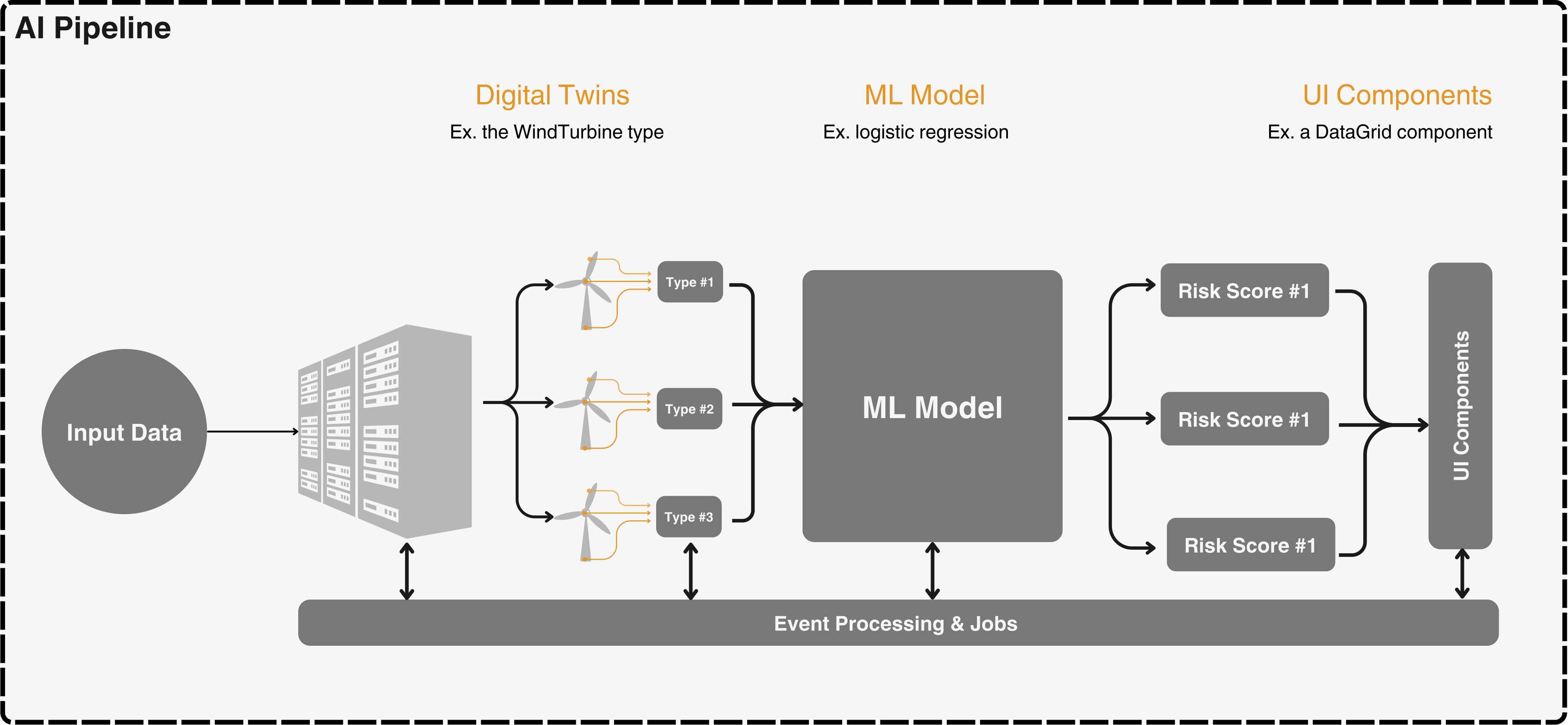 The C3 Agentic AI Platform supports the entire machine learning lifecycle, from data preparation to model deployment and monitoring. This integration allows you to leverage the platform’s data management capabilities while incorporating advanced analytics and predictive capabilities into your applications.
ML Pipeline components
The ML Pipeline consists of several key components that work together to enable machine learning within the C3 Agentic AI Platform:Data preparation
Tools for cleaning, transforming, and feature engineering that prepare your data for machine learning.
Model development
Support for developing models using popular frameworks like TensorFlow, PyTorch, and scikit-learn, as well as native C3 AI model types.
Model training
Infrastructure for training models on large datasets, with support for distributed training and GPU acceleration.
Model deployment
Mechanisms for deploying trained models to production, making them available for inference within your applications.
Model monitoring
Tools for tracking model performance, detecting drift, and managing model versions over time.
How ML Pipeline Integration works
The ML Pipeline Integration leverages the C3 Agentic AI Platform’s model-driven architecture to create a seamless connection between your data model and machine learning workflows:- Data access: ML models access data through the Type System, using the same data model as the rest of your application
- Feature engineering: Transform raw data into features suitable for machine learning, with support for both batch and real-time processing
- Model training: Train models using your preferred framework, with support for distributed training on large datasets
- Model deployment: Deploy models to production with a few clicks, making them available for inference within your application
- Model monitoring: Track model performance over time, detect drift, and manage model versions
Supported model types
The C3 Agentic AI Platform supports multiple types of machine learning models:Framework-based models
You can develop models using popular machine learning frameworks and deploy them within the C3 Agentic AI Platform:Native C3 AI models
The platform also provides native model types that are optimized for common machine learning tasks:Pre-built AI services
The platform includes pre-built AI services for common tasks like time series forecasting, anomaly detection, and natural language processing:Data flows in ML pipelines
ML pipelines in the C3 Agentic AI Platform involve several data flows:Training data flow
The training data flow prepares historical data for model training:- Data extraction: Extract relevant data from the Type System or external sources
- Data transformation: Clean, normalize, and transform the data into features
- Feature engineering: Create new features that capture domain knowledge
- Training/validation split: Split the data into training and validation sets
- Model training: Train the model on the training set and evaluate on the validation set
Inference data flow
The inference data flow processes new data to generate predictions:- Data ingestion: Ingest new data from sensors, transactions, or other sources
- Feature computation: Transform the raw data into the features expected by the model
- Model inference: Pass the features to the model to generate predictions
- Post-processing: Apply business rules or thresholds to the predictions
- Action generation: Generate actions or alerts based on the predictions
Feedback data flow
The feedback data flow captures the results of predictions to improve future models:- Outcome recording: Record the actual outcomes corresponding to predictions
- Performance evaluation: Compare predictions to actual outcomes
- Model monitoring: Track model performance metrics over time
- Drift detection: Detect when model performance degrades
- Retraining trigger: Trigger model retraining when necessary
Practical application: Wind turbine predictive maintenance
Let’s explore how ML Pipeline Integration works in a wind turbine predictive maintenance application:Data preparation
The application collects sensor data from wind turbines, including temperature, vibration, power output, and rotational speed. This data is stored in the C3 Agentic AI Platform’s Type System:Feature engineering
Raw sensor data is transformed into features that capture patterns relevant to turbine failures:Model training
A machine learning model is trained to predict turbine failures based on the engineered features:Model deployment
The trained model is deployed to production, making it available for inference:Inference and action
The deployed model generates predictions that trigger maintenance actions:Model monitoring
The platform continuously monitors model performance and triggers retraining when necessary:Benefits of ML Pipeline Integration
Integrating machine learning pipelines with the C3 Agentic AI Platform provides several key benefits:- Unified data model: ML models work with the same data model as the rest of your application
- Simplified deployment: Deploy models to production with a few clicks
- Automated monitoring: Track model performance and detect drift automatically
- Scalable infrastructure: Train and serve models on distributed infrastructure
- Version control: Manage model versions and promote models from development to production
- Feedback loops: Capture outcomes to improve future models
Related concepts
Data Flows
Learn more about data flows in ML pipelines.
ML Models
Explore different types of ML models supported by the C3 Agentic AI Platform.
Type System
Understand how the Type System supports ML pipelines.